You can hike in Iceland every month of the year. While this is true, it has misled more trip plans than any other fact about the island. The real question is which Iceland you want, because the island changes character so completely with the seasons that a July visitor and a November visitor come home describing different countries.
TL;DR. For a first hiking trip, come between late June and August. If you want our pick, come late August to mid-September. From late October to mid-April, the mountains stop being a hiking destination at all - that season belongs to a different sport.
The guide below will go into detail about what it’s like to walk the island in each season, drawn from over nine years’ worth of trips spread across all seasons.
When can you actually hike in Iceland?
Iceland has three hiking seasons - a thawing spring, a wide-open summer, and a golden early fall. Winter (late October to mid-April) changes the sport entirely, as the level of preparation and knowledge veers into mountaineering. The seasons’ boundaries don’t run on fixed dates - a snowy winter can push spring hiking back by weeks, and the seasons arrive later the higher you go, so the lowlands can be in full summer while the ground at 800 meters is still working through May. Two variables run through everything below - how much daylight you have, and where the snow line sits - so keep an eye on them as each season comes up.
Winter (late October-mid-April): mountaineering territory, not hiking
Tour operators soften this season because there are glacier walks and ice caves to sell. From late October to mid-April, Iceland’s highlands are mountaineering objectives. Moving on them safely requires winter skills - reading avalanche terrain, moving on ice, navigating in flat light - and that is beyond what this site covers.
As a rule of thumb, in winter anything above roughly 400 meters or off a maintained trail stops being a hike. Below that line, some low-level and popular routes remain walkable, but you should account for other seasonal factors. Daylight shrinks to four or five hours in December, which turns even a modest outing into a race. Moreover, plenty of winter plans end at a closed road before the trail even starts.
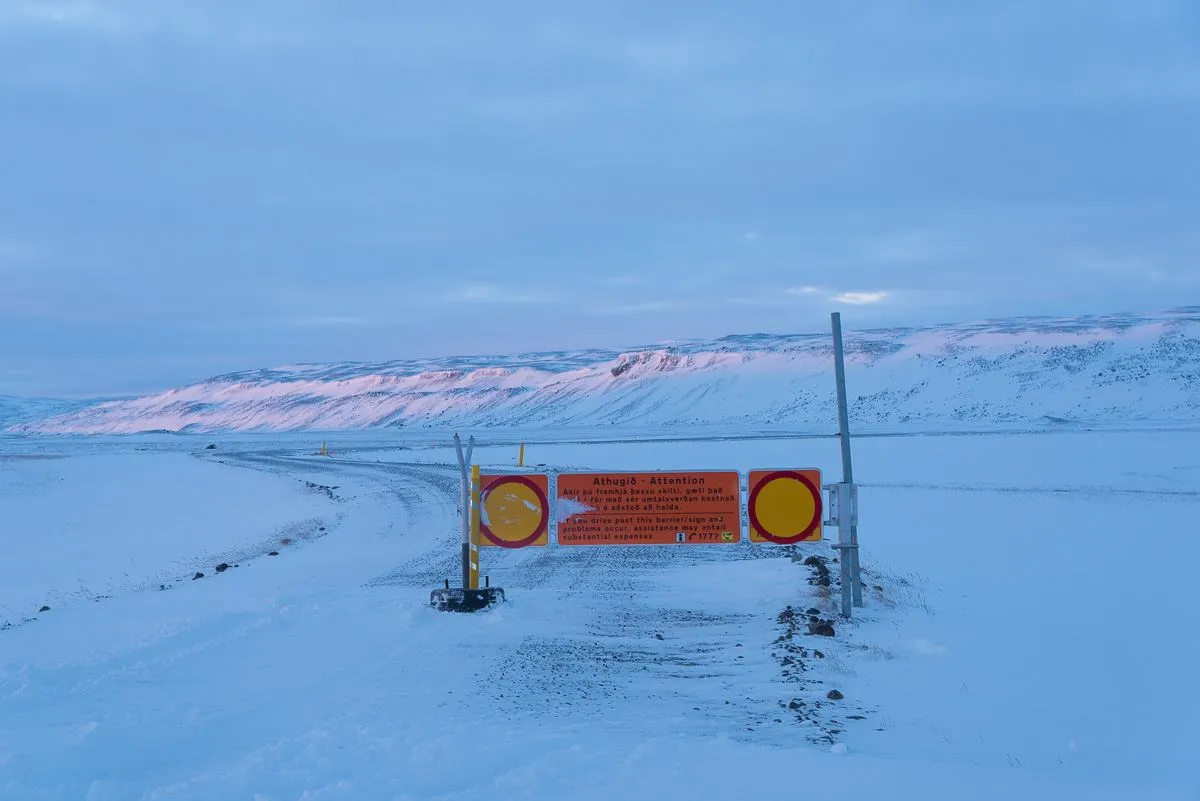
Winter also removes infrastructure you may not realize is seasonal. The log that bridges the river crossing at Glymur, Iceland’s second-highest waterfall, is taken out in early fall because it ices over and becomes more dangerous than fording the river outright. And the few popular trails that do stay open, like the short walk to Svartifoss, get polished by footfall into sheets of ice. Carry microspikes at a minimum, even for walks that would be trivial in summer.
But winter pays something back. The aurora is a gift, and if the northern lights are your goal, you do not need to give up hiking to see them - the September section below explains why.
Spring (late April-early June): the island wakes, wet
In spring you are negotiating with two kinds of water. Above you, the winter snowpack still owns the summits, and early-season high routes demand crampons, an ice axe, and the judgment to read avalanche risk and the stability of snow bridges. If that list sounds unfamiliar, stick to lower ground.
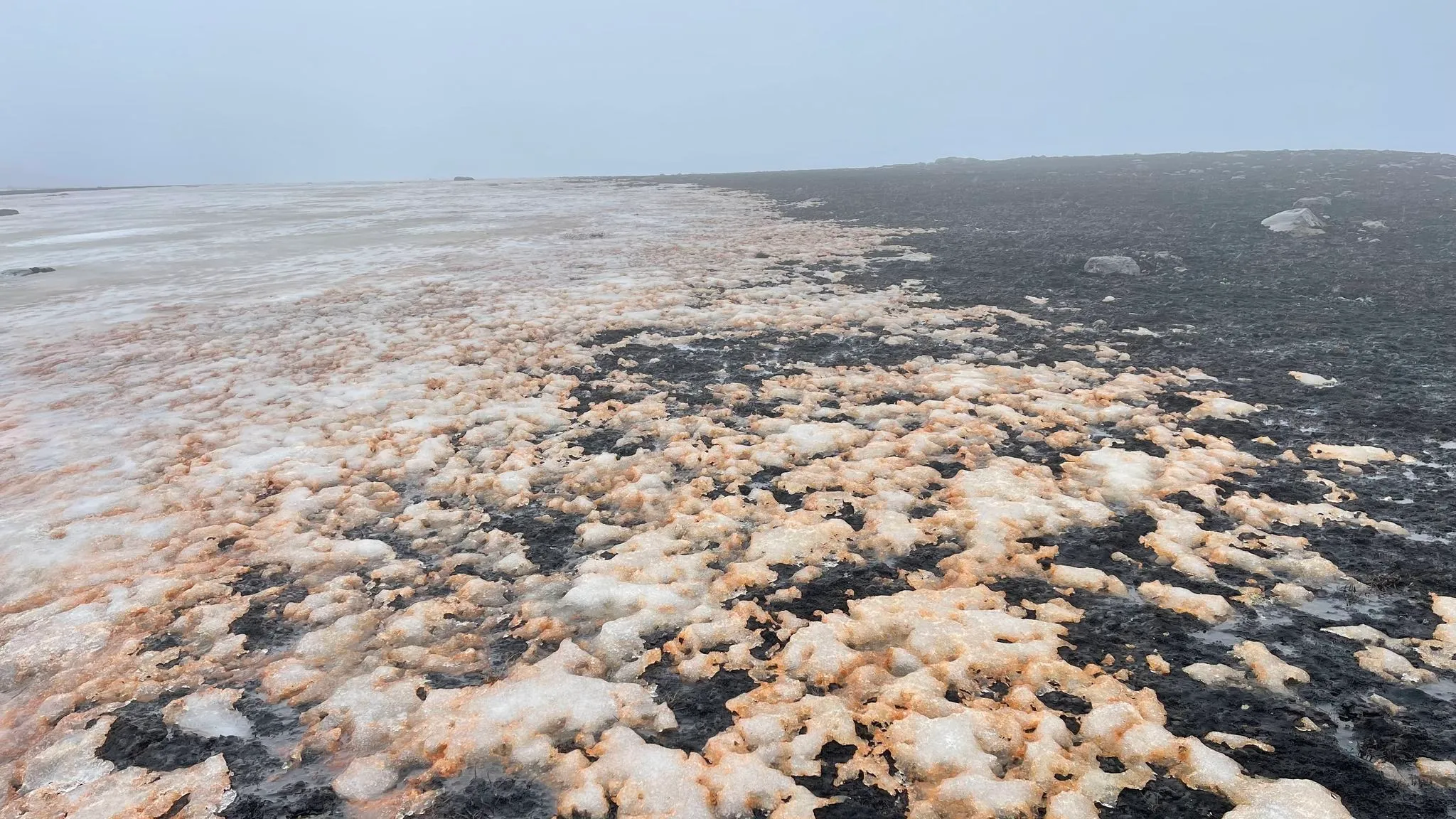
Just below the snow line the problem inverts. The ground is thawing, and under the melt line the trails are waterlogged and soft. Walking them is slow, wet, and unrewarding, and a boot print in saturated turf becomes erosion that takes years to heal. On the trails above Þakgil in the first week of June we found the melt line as a band of rotten, ash-flecked snow over ground that gave underfoot - passable, and better left alone for a few more weeks.
Spring in Iceland belongs to the birds more than to us. Ground-nesting birds lay from May, and some reserves ask walkers to keep strictly to marked trails during nesting season - Búlandsnes near Djúpivogur, a wetland peninsula thick with birdlife, is a good example. On coastal and low-lying routes the arctic tern (kría in Icelandic) will actively defend its colony from May into early July by dive-bombing anything that walks near the eggs. Since it aims for the highest point of the intruder, a hiking pole raised above your head gives the tern a target that is not your scalp.
Summer (June-August): everything opens, eventually
Summer is when the whole island becomes available, and the operative word is becomes. The highland roads do not open on a date; they open in a cascade as the snowpack releases them, typically from late May on the Kjölur side through mid and late June for Landmannalaugar and Þórsmörk, with the remotest tracks following into July. The openings are announced road by road at road.is, and a trip built around the highlands in early June is a bet against the snowpack.
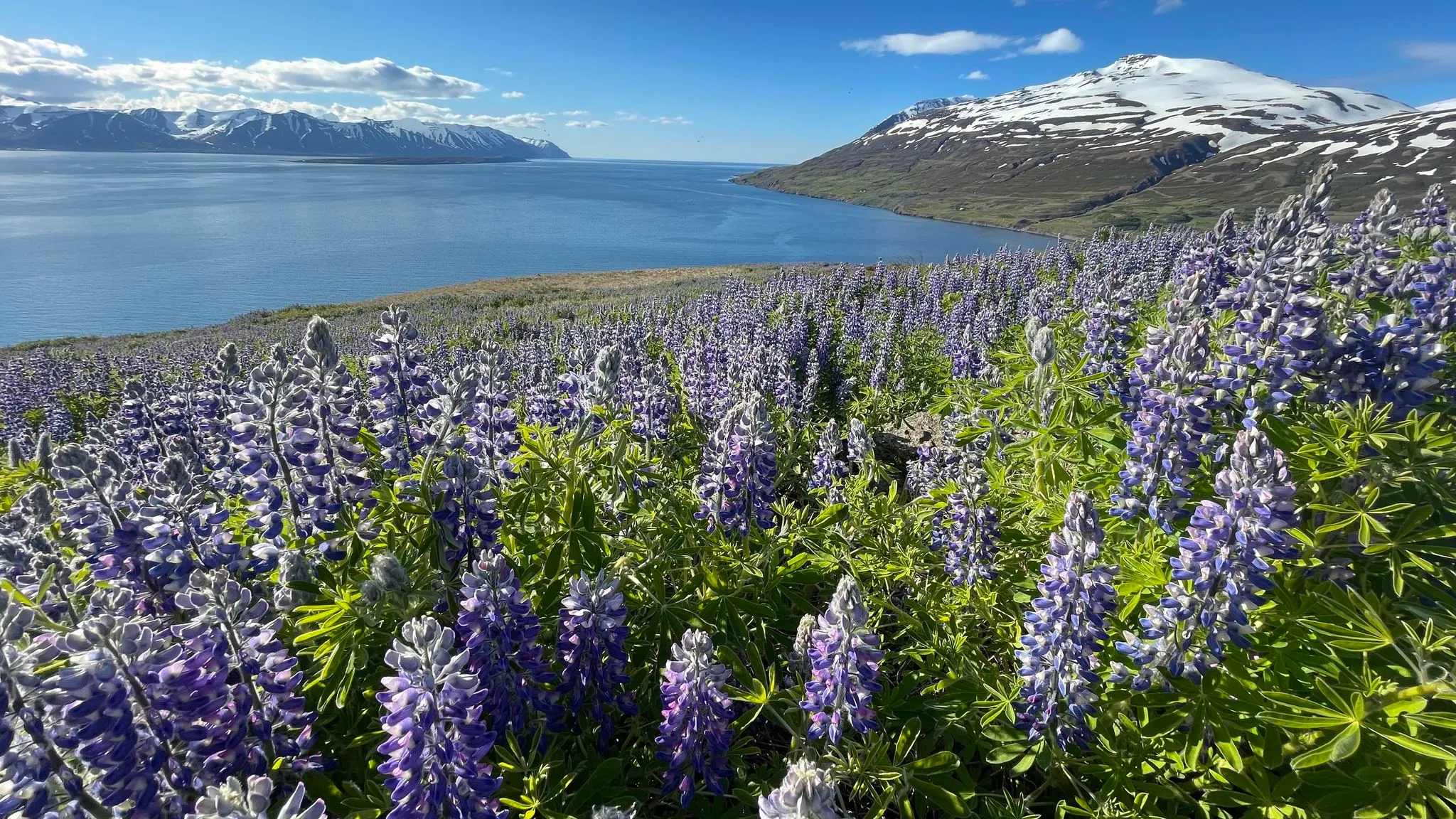
Every trail in this catalog is open by July, the famous hut-to-hut routes are running, and the midnight sun means daylight simply stops being a constraint - you can start a summit at eight in the evening and top out into a sunset that never quite finishes. That freedom is also the season’s best crowd tactic, because the marquee trails empty out after dinner while the light stays generous.
Summer charges for all of it. July accommodation and car hire run at peak prices, the famous trailheads are busy from mid-morning, and the huts on the celebrated multi-day routes book out months ahead, so a summer “best time” is moot if the beds are gone. Two other small seasonal notes: around lakes like Mývatn in the north, midges arrive in clouds in high summer (most of them don’t bite, unlike their Scottish kin, but they still get in your eyes and ears), and the midnight sun that frees your hiking days can quietly wreck your sleep unless your tent or room goes properly dark.
Glymur, Hvalfell and Hvalskarð WEST ICELAND The summer classic near Reykjavík - and the trail whose river crossing depends on a seasonal log. Cross early in the day; glacial rivers rise with the afternoon melt.Late August to mid-September: the connoisseur’s window
This is our pick, and we hold it with conviction. As summer vacations come to a close and schools go back in session, crowds thin first at the campgrounds and then on the trails, and prices ease off their July peak. The weather is still generally manageable, the trailheads are all still reachable, and camping still works - everything summer offers is still on the table, with far fewer people around.
Furthermore, September gives you what we would call normal days, twelve to fourteen hours of light, which is still more than enough for travel plus most day hikes. And for the first time since April the nights are properly dark, which means the aurora is back while the trails are still open, giving you access to the full spectrum of activities that make Iceland such a unique place.
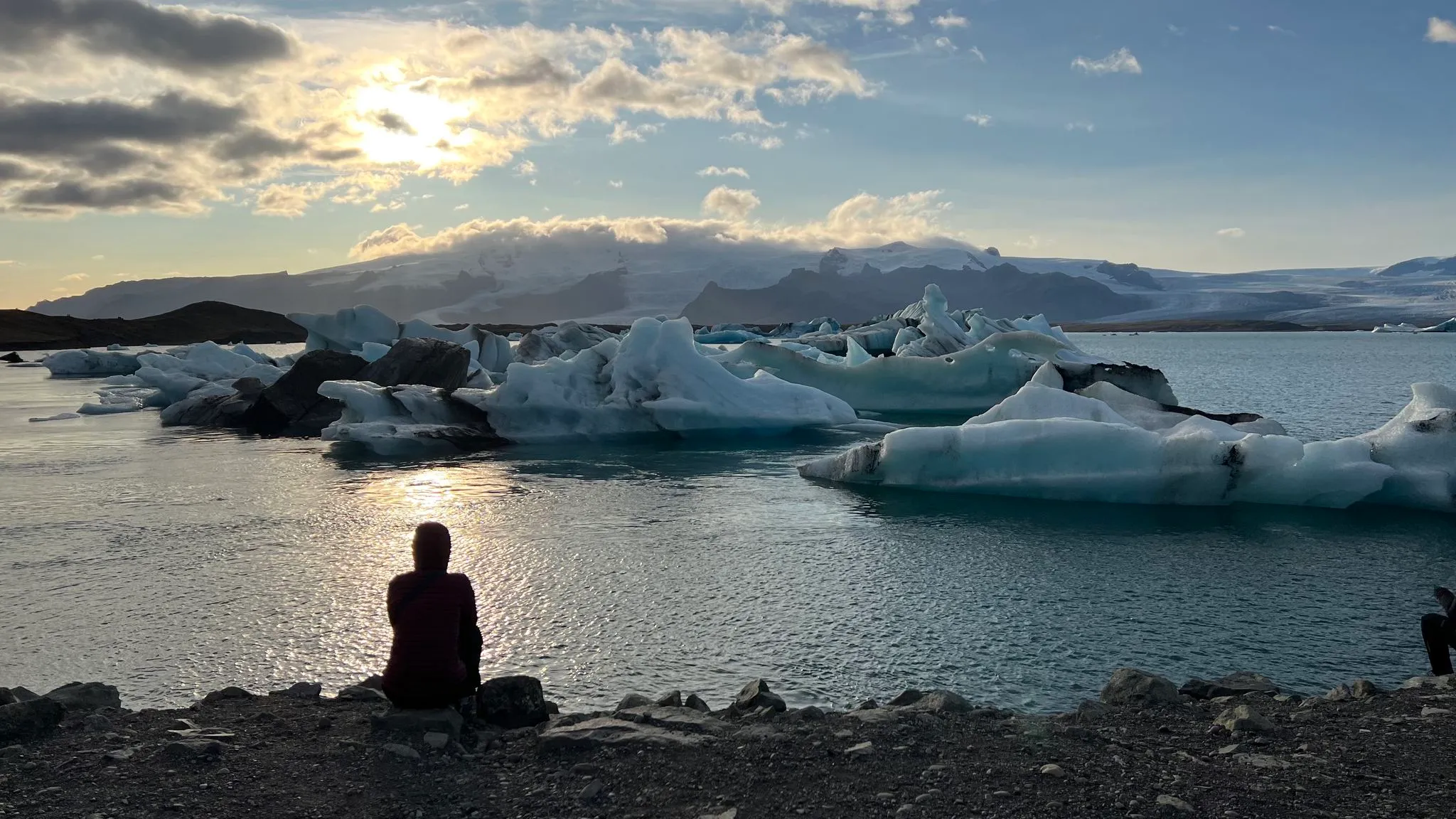
The season doesn’t end - it frays
So how long can you expect good hiking conditions to last into the fall? It depends on the year. The first snow can land any time from early September, it usually melts, it sometimes stays, so you have to adapt your plans.
We have walked into the fraying more than once. On Bjólfur above Seyðisfjörður in the first week of September, we met snowdrifts and blowing snow above 800 meters and near-whiteout conditions at 900, on a day that had started as a normal fall hike at the trailhead. And the calendar offers no guarantees in the other direction either - on the trail from the Wilderness Center to Laugarfell in mid-June we walked through falling snow. Summer snow is simply not unusual in the highlands.
As you move into the second half of September, adverse weather events become more frequent, and by mid-October you’re more likely than not to encounter full winter conditions. The hiking infrastructure frays as well: huts close, some mountain passes and F-roads become impassable, and the more remote campgrounds shut for the year.
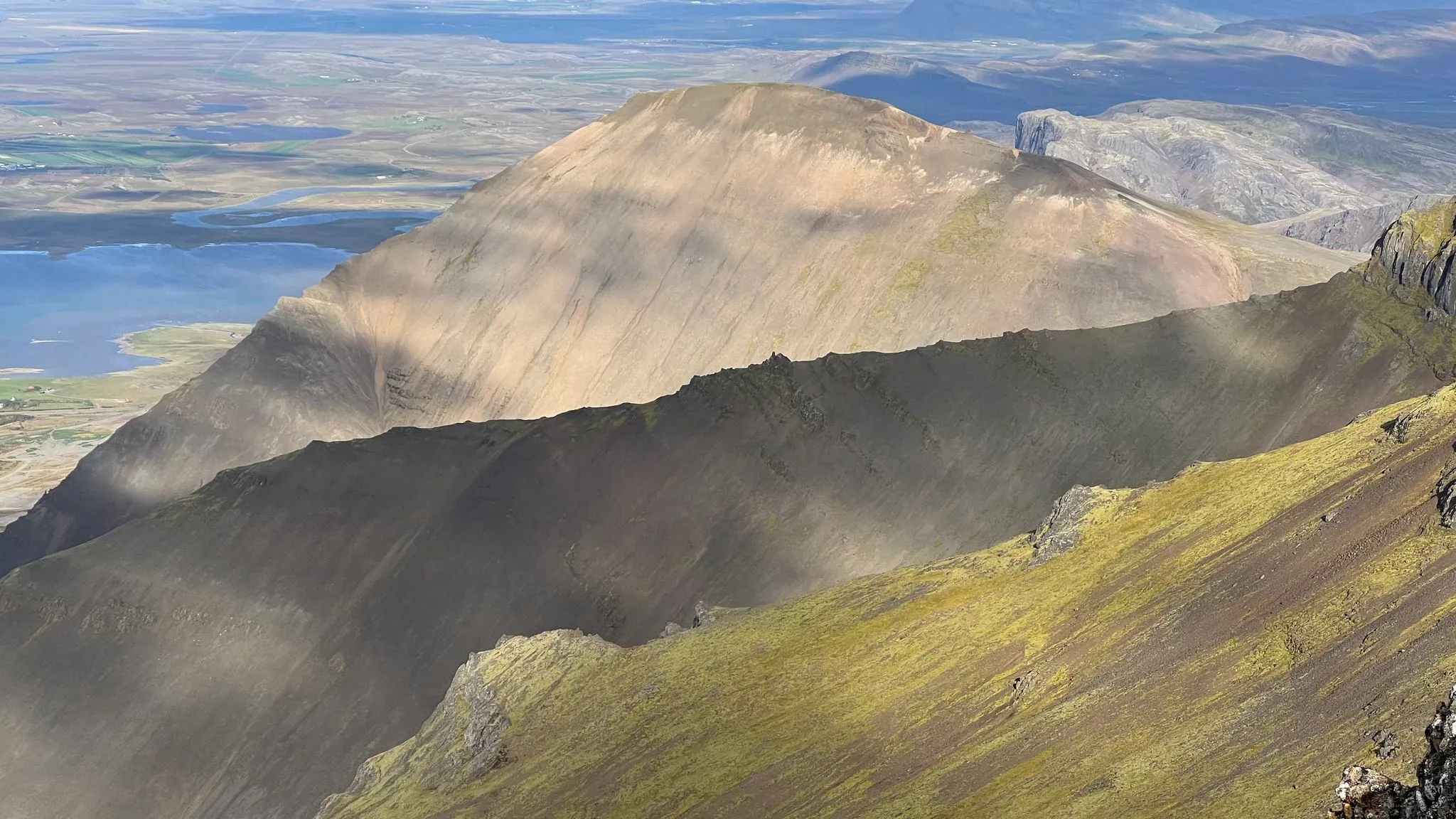
The one thing to keep in mind: the hiking seasons are a good proxy for general planning. Whatever the month, the forecast decides, so check current trail conditions the morning you go, and build contingency plans for the unexpected. Swap summits for a coastal walk if low fog or high winds are in the forecast. Or replace hiking entirely with a swim at one of the public pools that dot the island and brave the weather from a comfortable 39°C outdoor hotpot.
Daylight, month by month
Iceland’s daylight swings dramatically over the course of the year - in Reykjavík it changes by almost seventeen hours:
| Month | Daylight (mid-month) | Month | Daylight (mid-month) |
|---|---|---|---|
| January | ~5¼ h | July | ~19¾ h |
| February | ~8½ h | August | ~16½ h |
| March | ~11½ h | September | ~13 h |
| April | ~15 h | October | ~10 h |
| May | ~18¼ h | November | ~6½ h |
| June | ~21 h | December | ~4¼ h |
The summer and winter extremes create walking conditions unlike those at less extreme latitudes. June’s twenty-one hours are why odd-hour hiking works. December’s four are why winter plans race the clock. The crossover months, April and September, are where long hiking days and real nights coexist. For today’s actual sun times and the aurora outlook, the conditions page carries live data.
So when should you come?
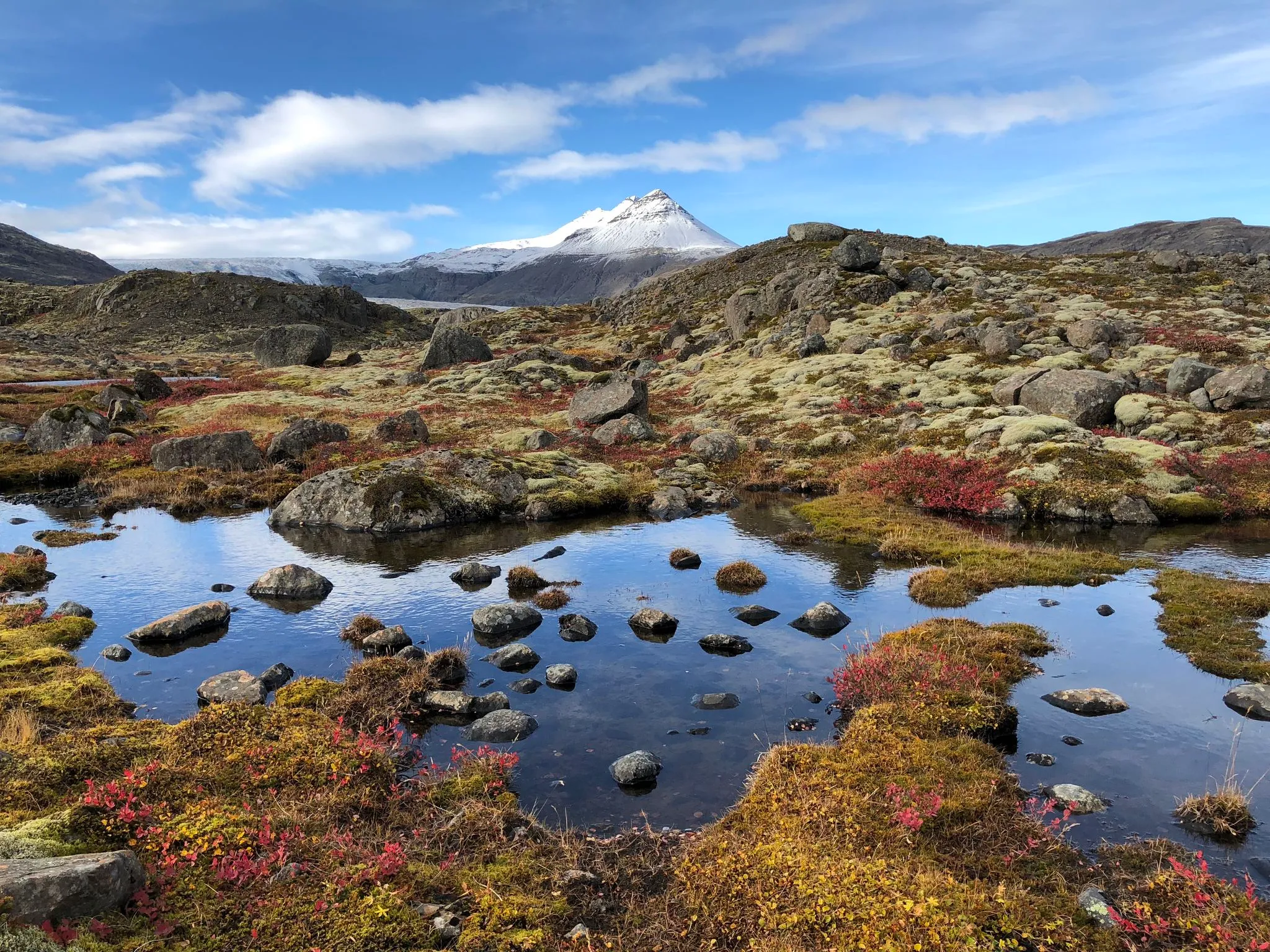
For a first Iceland hiking trip, come between late June and August, when everything is open and the daylight accommodates long days. If you are chasing the highlands and the big hut-to-hut routes, aim for July and book the huts the previous winter. Photographers should take September, when the light drops low, the moors turn red and gold, and the aurora returns over trails that are still open. Families do best in high summer, when the weather is most favorable. And if you want the island closest to how we like it - quiet trails, workable weather, camping under the first dark skies - come in the window between late August and mid-September.
You can still hike Iceland every month of the year. Just pick the island you want to meet.